
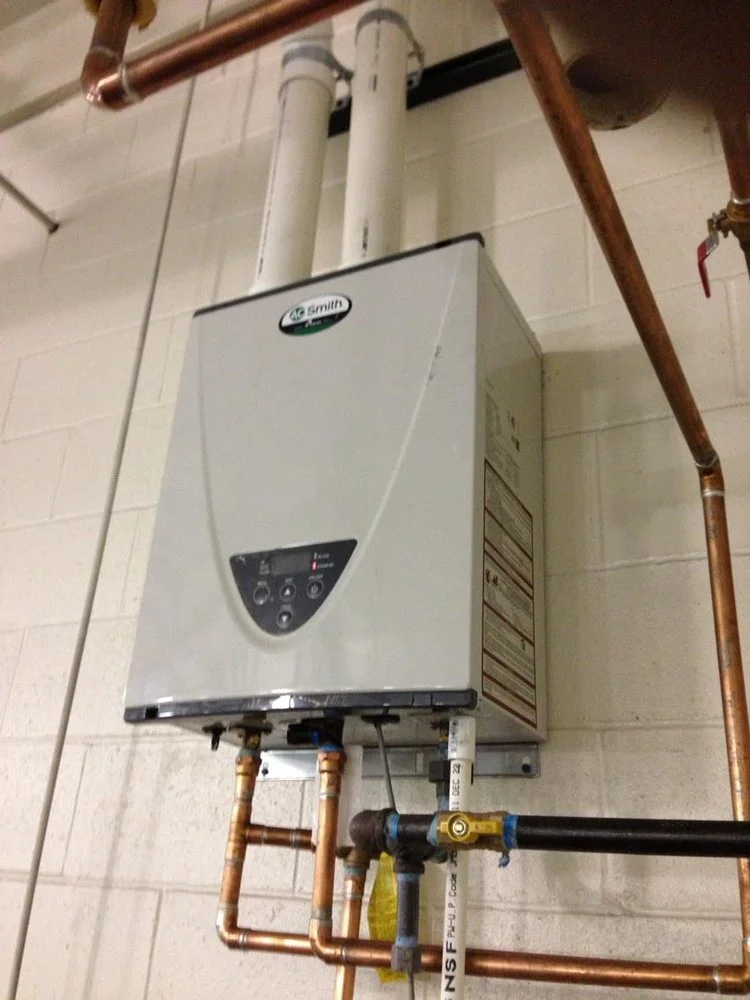
Tankless is the most oversold and underexplained purchase in Austin plumbing. Oversold, because the brochure pitch — endless hot water, twenty-year lifespan, a shoebox on the wall — is real but skips the two Austin-specific catches: our hard water eats heat exchangers, and most conversions need real gas work the teaser price omits. Underexplained, because done right — sized to the house, plumbed with treatment, vented properly — it's the best water-heating decision most households can make. This guide covers both halves: who installs them well in 2026, and the questions that keep a $4,000 project from becoming a $6,500 surprise.
This is editorial research, not advertising: no company paid to appear here, and none were contacted for placement. Beaver A.C. & Plumbing is a referral service, not a contractor, so we're deliberately unranked and excluded. Ratings drift week to week, so we describe durable reputations rather than quoting stars that stale by the month. Verify current reviews and licenses before hiring anyone — including anyone we match you with.
The water-quality specialist, which for tankless is the whole argument: a shop that treats the softener conversation as step one of the conversion rather than an upsell at signing. Five-star-caliber, west-metro strong, and the right first call for the treatment-inclusive project.
The suburban rankings' consistent top-lister runs a steady tankless practice across the metro — responsive scheduling, clean installs, and the volume that keeps crews fluent in the brands' quirks.
The 4.9-star-caliber shop brings its review-driven culture to conversions, strongest in Austin proper and the northern suburbs — a reputation built one referral at a time, which is exactly the accountability you want on a project with buried gas work.
Pure-play plumbing at volume with free estimates — useful on tankless specifically, because the free-estimate visit is where conversion surprises (gas sizing, vent paths) surface before they're your problem.
The multi-trade heavyweight (4.7-caliber, thousands of reviews) whose bench matters on conversions that grow: electric-to-gas switches, condensate routing through finished space, recirc pumps on long plumbing runs. One crew, several licenses, no relay race.
All-brands with a satisfaction guarantee — and brand-agnosticism counts double in tankless, where the right unit depends on your gas supply, vent path, and demand profile rather than a distributor's monthly focus.
The upfront-pricing shop with northern-arc strength — Round Rock, Cedar Park, Georgetown, plus Austin — and a pricing culture that suits tankless's biggest hazard: scope drift. A firm number from a 20-person shop is worth a lot on a project with this many variables.
| Company | Focus | Known for | Service area |
|---|---|---|---|
| Cold Is On The Right | Heaters & softeners | Treatment-first tankless projects | Austin & west metro |
| Daniel's Plumbing & AC | Plumbing + HVAC | Top-listed suburban rankings | Austin metro & suburbs |
| Proven Plumbing & Air | Plumbing + HVAC | 4.9-star-caliber 2026 standing | Austin & north suburbs |
| Reliant Plumbing | Residential plumbing | Free estimates, same-day | Austin metro & suburbs |
| Stan's | Full-service multi-trade | 4.7/5, thousands of reviews | Greater Austin metro |
| Fox Service Company | Plumbing, HVAC & electrical | All-brands; satisfaction guarantee | Austin metro |
| Plumbing Outfitters | Full-service plumbing | Upfront pricing culture | Round Rock, Cedar Park, Georgetown & Austin |
Tell us your current setup and your household size. Beaver matches Austin homeowners with a licensed, vetted tankless installer — free, full conversion price quoted before any work starts.
The unit is the headline and rarely the story. A whole-home gas tankless draws several times the BTUs of the tank it replaces, which is why gas-line upsizing — sometimes back to the meter — headlines so many conversion invoices. Venting is second: tankless wants dedicated stainless or PVC routing with real termination rules, and the distance from your mechanical closet to an exterior wall is a pricing fact of your floor plan. Condensate (on high-efficiency condensing units — most of what's installed now) needs a drain path. Electrical is minor but real: the unit needs an outlet, which decades-old heater closets often lack. Stack it honestly and the $3,500–$6,500+ conversion range explains itself — and the like-for-like tankless swap, years later, costs a fraction, which is part of the long-game payoff.
Central Texas water is the one genuine threat to the twenty-year tankless story. Scale accumulates in the heat exchanger, flow drops, error codes bloom, and manufacturers' warranty terms effectively assume you've addressed water quality and annual maintenance. The Austin protocol: a softener or scale-treatment system priced into the conversion (the honest shops raise it unprompted — it's the best single competence tell on this page), isolation valves installed at the unit (they make descaling a 45-minute service instead of a plumbing project; their absence marks a corner-cut install), and annual descale service treated as the cost of ownership it is. Priced together, treatment-plus-tankless still wins the decade math comfortably — the softener guide runs the numbers.
A proper conversion is a full-day project with a recognizable shape: old tank drained and hauled; gas line run or upsized with the work pressure-tested, not sniffed; the unit mounted with service clearances (code and sanity both); venting routed and terminated to spec; condensate plumbed with a neutralizer where required; isolation valves installed; the system fired, combustion-checked, and flow-tested at multiple fixtures simultaneously; and the temperature set and demonstrated. You finish with permit paperwork, warranty registration, and — from the good shops — a thirty-second lesson on the error-code display you'll otherwise meet cold some February morning. A conversion "done by lunch" skipped steps that surface in year two, conveniently past the labor warranty.
Endless hot water isn't instant hot water — the wait for hot at a distant tap is a pipe-length problem tankless doesn't solve alone. Many current units support recirculation modes with a dedicated return line or a crossover valve retrofit, and on Austin's larger single-story sprawls the difference is genuinely daily-life-grade. Quote it with the conversion (cheaper than retrofitting later), put it on a schedule or demand button rather than 24/7 (always-on recirc quietly refunds your efficiency gains), and enjoy the rare upgrade whose benefit you notice every single morning.
Incentive footnote: efficiency programs periodically favor condensing tankless and heat-pump alternatives alike — the landscape shifts yearly, and the installer who cites current numbers unprompted is showing you the freshness of everything else they know. Ask all three bidders; grade the specificity.
Three real cases: a tight budget with a healthy gas tank setup — the $1,800 like-for-like swap is defensible money; the all-electric house without panel headroom — whole-home electric tankless draws breaker-panel-redesign amperage, and a heat-pump water heater is usually the smarter electric play (our water heater guide covers it); and the near-term seller, since tankless pays over a decade you won't own. For everyone else — especially households tired of the third shower running cold — the conversion done right is the rare home project that still feels like a good decision fifteen years later. Get the three matched quotes, demand the gas math, and price the water treatment in from day one. Or skip the calls: one form to Beaver, and a licensed, vetted installer arrives with the full number already in writing.