
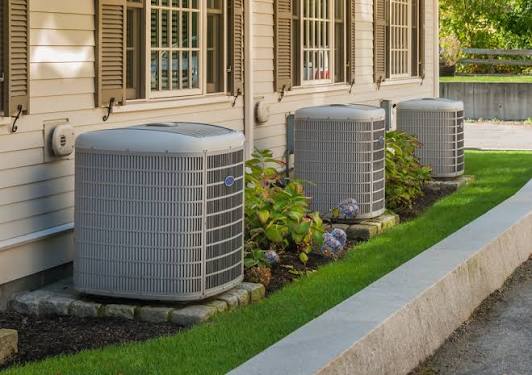
If you've gotten an AC replacement quote in Austin recently and felt your eyebrows leave your face, you're not imagining it: 2026 is the most expensive year to replace an air conditioner in recent memory, and also — awkwardly — one of the more sensible years to do it if your system is old. The typical Austin homeowner now pays $6,500–$8,500 for a mid-efficiency 3-ton system installed, with the full market running from around $4,400 for basic swaps to $12,000 and beyond for high-efficiency equipment or complicated installs. Here's exactly where that money goes, what the refrigerant transition changed, and how to read a quote like someone who's seen a hundred of them.
| Scenario | Typical installed cost |
|---|---|
| Basic like-for-like swap, 2–2.5 ton, minimum efficiency | $4,400–$6,500 |
| Mid-efficiency 3-ton system (the common Austin job) | $6,500–$8,500 |
| High-efficiency / variable-speed 3–4 ton | $9,000–$12,000+ |
| Full HVAC system (AC + furnace or air handler) | $8,500–$16,500 |
| Add: duct repair or replacement | +$1,500–$5,500 |
| Add: electrical/panel upgrades | +$500–$2,000 |
Tonnage drives the base price, and Austin homes mostly need 2.5–4 tons depending on square footage, insulation, and how much west-facing glass your builder thought was a good idea. Be suspicious of any quote produced without a load calculation — "same size as the old one" is how houses end up with oversized systems that short-cycle, cool clammy, and die young.
The big 2026 story: every new residential AC now ships on R-454B refrigerant, the lower-global-warming-potential successor to R-410A — and the two don't mix. Practically, that means three things for Austin buyers. First, matched systems are now the norm: your new condenser needs a compatible indoor coil, so the era of the cheap condenser-only swap is effectively over. Second, the transition added roughly $500–$1,000 to equipment costs across the market — that's baked into every quote you'll see, not one company padding. Third, the flip side: every year you keep an R-410A system running, that refrigerant gets scarcer and pricier to service, and R-22 systems are already deep in that territory. The transition simultaneously raised the price of replacing and the cost of not replacing — which is why the age of your current system matters more than ever.
Beaver matches Austin homeowners with licensed, vetted install pros who quote the full price — equipment, labor, code items — before any work starts. Free, no obligation.
Texas law sets the floor at 15.2 SEER2 for new split systems — nothing below that can legally be installed here. The question is how far above the floor to go, and Austin's answer differs from the national one because our cooling season runs April through October. The step from 15.2 to 16–17 SEER2 typically costs $800–$1,500 more and pays back reliably over a decade of Austin summers. The jump to 18+ SEER2 variable-speed equipment costs several thousand more and is less about payback than comfort: variable-speed systems hold tighter temperatures, wring more humidity out of the air (a real quality-of-life difference here), and run dramatically quieter. If you'll be in the house ten years, the mid tier is the value play; if you're selling in three, the code minimum is honest economics.
Reading an Austin replacement quote line by line: permits are real — the city and surrounding jurisdictions require them, and a contractor who suggests skipping permits is volunteering you for resale headaches. Code-required items are real: float switches, surge protection, disconnect boxes, and pad replacement are commonly required or strongly advisable, and they're cheap insurance. Duct work is the honest wildcard — $1,500–$5,500 when needed, and in Austin's older housing stock it's often genuinely needed; leaky ducts can waste a meaningful share of the cooling you're about to pay five figures to produce. Ask for the duct assessment's evidence (photos, leakage numbers), not just the line item. Electrical upgrades ($500–$2,000) show up when older panels can't support new equipment. The padding, when it exists, usually lives in vague "miscellaneous materials" lines and inflated "extended labor warranties" — ask what each line buys you, and watch which answers come back specific.
The framework from our Austin repair cost guide applies: multiply the pending repair by the system's age, and past $5,000–$6,000, price a replacement. Layer the 2026 specifics on top: an R-22 system needing any sealed-system work is nearly always a replace; a 12+ year R-410A system facing a compressor is usually a replace; an 8-year-old system with a $400 problem is a repair, full stop. One more Austin-specific factor — heat pumps deserve a look. Because our winters are mild, a heat pump can replace both your AC and most of your heating for a modest premium over a straight AC swap, and federal incentives have favored them in recent years. If your furnace is also aging, run that comparison before signing anything.
Knowing the shape of a proper install helps you spot a rushed one. A standard Austin changeout is a one-day job for a two-person crew: recover the old refrigerant (legally required — it can't just be vented), pull the old condenser and coil, set the new pad and condenser, install the matched indoor coil or air handler, braze and pressure-test the line set with nitrogen, pull a deep vacuum on the system (this step, skipped or shortcut, is the quiet killer of new equipment), weigh in the refrigerant charge to the manufacturer's spec, and commission the system — measuring temperature split, static pressure, and amp draws rather than just feeling for cold air. You should end the day with a permit on file, commissioning numbers on your invoice, and registration paperwork for the manufacturer warranty. Crews that finish suspiciously fast usually skipped the vacuum or the commissioning; both shortcuts surface as problems in year two, conveniently after the labor warranty expires.
Replacement pricing breathes with the calendar. October through March is buyer's market — install calendars are open, promotions are real, and you can get three quotes without sweating through any of them. May through September is seller's market, and an emergency replacement during a 105° stretch is the single most expensive way to buy an air conditioner: no leverage, no comparison time, and a premium for the crew that can come tomorrow. If your system is past 12 years old and limping, the cheapest decision available to you is replacing it on your schedule this fall instead of the grid's schedule next July. A fall inspection can tell you honestly whether you've got another summer in the tank.
A note on financing, since most Austin replacements are financed: 0%-for-12-months style promotions are common and legitimate, but compare the cash price against the financed price explicitly — some companies build the financing cost into the quote. Utility-side help exists too; Austin Energy has historically run rebate programs for high-efficiency equipment and heat pumps, and your installer should know the current offerings cold. If they don't, that tells you something about how current the rest of their knowledge is.
Get three, and make them comparable: same tonnage (from an actual load calculation), same efficiency tier, same scope (matched system, code items, any duct work priced separately). Require the total installed price in writing — equipment, labor, permit, disposal, tax — and both warranties spelled out: manufacturer parts (typically 10 years registered) and contractor labor (1–2 years is standard; longer is a differentiator). Then compare totals, not brand mystique: installation quality determines more of your system's lifespan than the badge on the condenser. Austin has no shortage of good installers — our company shortlist is a starting point, or skip the legwork and let Beaver match you with a vetted install pro who quotes the full price up front.
Bottom line for 2026: $6,500–$8,500 is the honest center of the Austin market for a standard replacement, the refrigerant transition is real and priced in everywhere, and the two most expensive mistakes available are buying in a heat-wave panic and buying on brand instead of installer. Avoid both and the five-figure quote becomes a fifteen-year answer.