
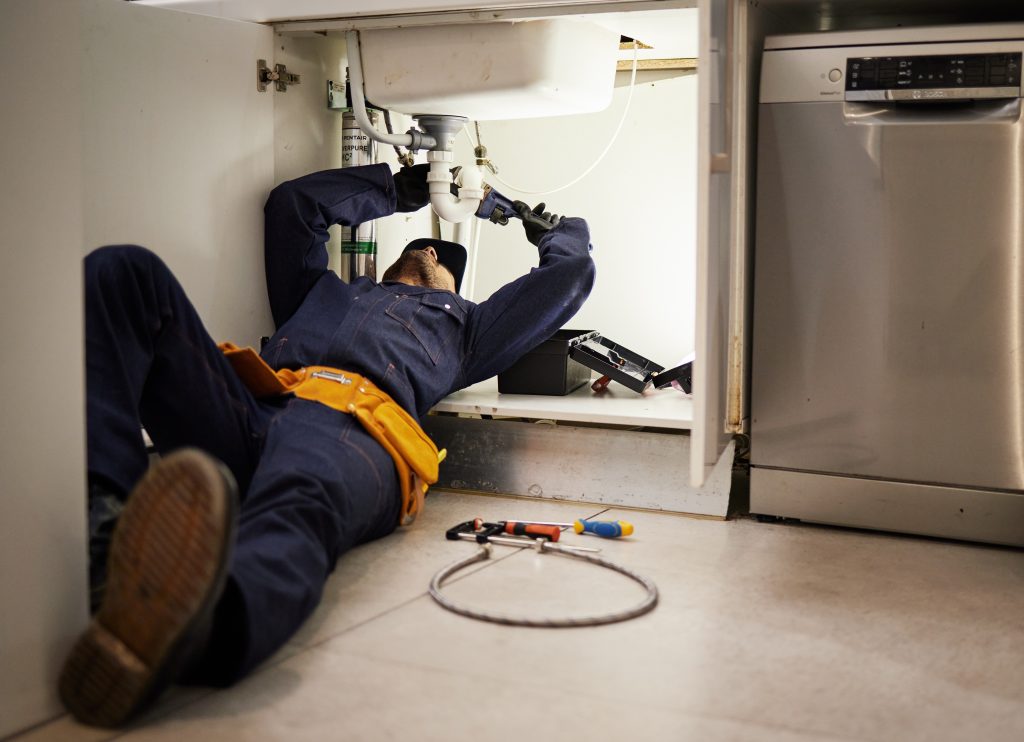
Ask five Austin homeowners what a plumber costs and you'll get five confident, contradictory answers — because each one bought a different thing. One paid a trip fee for a five-minute flapper diagnosis; one bought a Saturday-night emergency; one bought a repipe. Plumbing pricing isn't one number, it's a menu with a cover charge, and reading the menu before you're standing in water is worth real money. Here's the 2026 Austin menu, cover charge included.
Austin plumbers bill $100–$200 an hour or, more commonly now, by flat-rate task — a book price per job that bakes in the average time plus the truck, insurance, and licensing overhead behind it. Nearly everyone charges a $50–$100 trip fee to show up and diagnose, usually credited against work performed — ask, because "credited" versus "stacked" changes small-job math entirely. Flat-rate isn't a scam and hourly isn't automatically cheaper: flat-rate protects you when the job fights back; hourly rewards you when it doesn't. What matters is knowing which you're buying before the wrench moves.
The everyday entries, installed by a licensed pro: faucet repair or replacement, $150–$325 (plus the fixture, if you're not supplying it); toilet repairs — flappers, fill valves, seals — $150–$350; garbage disposal replacement, $250–$550; drain clearing, $150–$350 for standard machine-auger work, more if the clog lives deep in the yard; camera inspection, $250–$500, often discounted alongside clearing; pressure regulator (PRV) replacement, $250–$600; water heater replacement, $1,300–$2,600 for standard tanks (its own full guide). The heavyweight division: slab leak repairs from $1,500–$4,000 for a spot fix and whole-home repipes at $6,000–$15,000 — numbers that explain why the cheap annual pressure check exists.
Nights, weekends, and holidays add $75–$200 or an elevated trip fee, and the real emergency premium is subtler: you've surrendered comparison shopping. The 2 a.m. burst pipe buys whatever truck answers. The countermove is boring and effective — know where your main shutoff is (garage wall, or the meter box at the curb with a $12 meter key), because "water off, scheduled for morning" converts most emergencies into regular-rate appointments. The shutoff valve is the cheapest plumber in Austin.
Beaver matches Austin homeowners with a licensed, vetted local plumber — free, with the price quoted and itemized before anyone touches a wrench.
Quotes on identical work commonly span 40–60%, and the spread decomposes: overhead tier — the TV-advertising fleets price their marketing into every invoice, while the two-truck outfit with full licensing often does identical work for less; licensing level — Texas journeyman versus master matters for permit-pulling jobs; what's included — the low bid that excludes haul-away, parts tiers, or the code items has a way of catching up at invoice time. Austin's older housing adds an honest wildcard: behind the walls of a '60s–'70s house, galvanized supply lines and cast-iron drains turn simple jobs into archaeology, and a plumber who quotes a range on an old house is being truthful, not slippery.
The levers that actually work: batch the list — the trip fee amortizes beautifully across the running toilet, the drippy hose bib, and the slow drain handled in one visit; schedule off-peak — plumbers' calendars breathe in winter and midweek; supply decision speed, not parts — homeowner-supplied fixtures void workmanship coverage at some shops, but a homeowner who's pre-decided finish and model saves billable deliberation; fix small things small — the $200 running-toilet call is the $2,000 subfloor call scheduled early. The lever that doesn't work: hiring unlicensed help for supply-line work — when it fails, insurance reads the invoice, and Texas licensing exists precisely because water damage is the expensive kind of oops.
Walk away from: quotes that won't itemize ("it's all one price" is a price hiding something); pressure to decide during the diagnosis visit; per-fixture pricing that multiplies mysteriously on site; the absence of a license number on the paperwork — Texas requires it, and its absence predicts other absences. Green flags mirror them: written itemized quotes, license and insurance offered unprompted, options presented in tiers (fix, fix-plus, replace), and comfort with "we'll get a second opinion" — confident pros don't fear comparison because their pricing survives it.
Two lists worth calibrating against. Cheaper than people expect: the running-toilet fix (often a $150–$250 visit against months of tiered-rate water waste on an Austin bill), the annual water heater flush, the PRV pressure check, and almost any repair caught at the drip stage. Pricier than people expect: anything behind tile (access is the cost, not the part), hose-bib replacements soldered into old walls, "simple" shutoff-valve swaps on corroded galvanized stubs, and the first hour of any job in a 1960s house, which is billed partly as exploration. The pattern across both lists is the same: cost tracks access and age far more than it tracks the part in the plumber's hand. A $6 flapper and a $600 tile-buried valve are the same fifteen minutes of actual wrenching — separated by what stands between the truck and the problem.
Water heaters, repipes, sewer work, and gas lines require permits in Austin, and the permit line on a quote ($100–$300 territory with the plumber's handling time) is a feature, not a fee to shop around. Unpermitted mechanical work surfaces at the worst moments — home sale inspections, insurance claims, the city's records against your seller's disclosure — and retro-permitting costs multiples of doing it right. A plumber who volunteers the permit conversation is telling you how they work everywhere you can't see.
For budgeting purposes: keep $150–$350 in mind for the ordinary service call, $250–$600 for the mechanical middleweights, and four figures only when water heaters, slabs, or sewers enter the conversation. Get the itemized quote, batch the small stuff, learn the shutoff valve, and treat any bid you can't decompose as a bid you shouldn't accept. When the next drip starts, you'll know what it should cost before the phone rings — which is the entire advantage this article exists to hand you.