
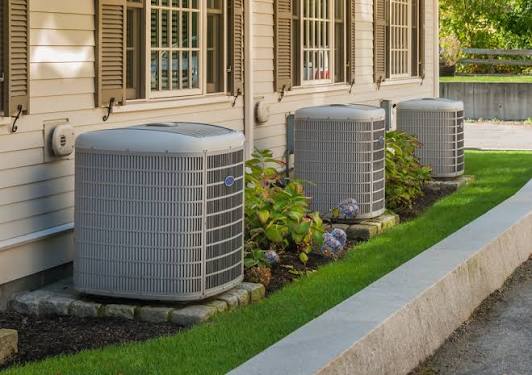
The AC lifespan question has a brochure answer — 15 to 20 years — and an Austin answer, and the gap between them is the most expensive misunderstanding in local homeownership. Systems age by runtime, not birthdays, and a Central Texas air conditioner runs roughly double the annual hours of its northern cousin: April through October at full commitment, 60–90 days above 95°, and a 130° attic cooking half the equipment from outside the ductwork. The honest local math, the symptoms by age, the maintenance multiplier that moves the number most, and the planned-exit strategy that beats every August emergency — all below.
Austin's realistic ranges: 10–14 years for maintained systems, 8–12 for neglected ones — with the brochure's 15–20 reserved for mild climates and gentle owners, a combination this zip code doesn't stock. The variance drivers, ranked: maintenance history (the biggest controllable — more below), installation quality (the vacuum pulled and charge weighed at install echo for a decade, per the commissioning sermon), sizing (oversized systems short-cycle themselves to early graves; the load calculation was never optional), location (attic handlers age faster than closet ones; west-wall condensers faster than shaded), and the duty cycle itself — the one variable nobody escapes at this latitude. Components stagger their exits accordingly: capacitors at 5–8 local years, fan motors at 8–12, compressors and coils holding the schedule that defines the system's own.
Years 0–5: warranty years — problems here are install-quality confessions, pursued under coverage with the paperwork the install guide told you to keep. Years 5–9: the capacitor-and-contactor era — single small repairs are normal metabolism, the $150–$350 tier, no cause for existential math. Years 10–12: the decision decade opens — fan motors, efficiency slide, the first refrigerant conversations — and every repair now runs the $5,000 rule (cost times age) before approval. Years 12+: borrowed time priced honestly — anything compressor- or coil-adjacent is a replacement conversation wearing a repair estimate, and the 2026 refrigerant transition (R-410A tightening, R-22 punitive) adds its thumb to the scale. The convergence signal at any age: two end-stage symptoms together — annual repairs plus sliding efficiency, or refrigerant loss plus comfort complaints — starts the replacement clock regardless of the birthday.
Beaver matches Austin homeowners with a licensed, vetted pro for the honest assessment — free, price quoted before any work.
The spread between the maintained and neglected ranges — three to five years of system life — is the maintenance program's entire case, priced at $100–$200 per visit: the spring tune-up catching marginal charge before it cooks a compressor, coil cleanings preserving the efficiency that neglect converts to runtime, drain service preventing the float-switch summers, and the documented baseline that makes every future symptom a comparison instead of a mystery. The compounding is the point — each caught small stress prevents the large one it was auditioning for — and the arithmetic embarrasses every alternative: $150 yearly against a replacement year deferred prices the visits as the cheapest AC years ever bought. The emergency-only strategy isn't a strategy; it's a payment plan for the early replacement, billed in Augusts.
The system's parts age on their own clocks, and knowing them converts repairs into calendar entries: run capacitors at 5–8 Austin years (the region's most common repair for a reason — $150–$300, sometimes twice per system life); contactors on a similar rhythm; condenser fan motors at 8–12 ($300–$700, heat waves harvesting the marginal ones); blower motors similarly ($400–$800); evaporator coils at 10–15 with the refrigerant circuit's luck; and compressors defining the system's own ending — their failure past year 10 being the replacement conversation in nearly every honest analysis. The pattern worth internalizing: the first tier's repairs are metabolism, the second tier's are messages, and the third tier's are conclusions — priced accordingly in the cost guide, and read correctly by any tech worth the trip fee.
Finding the birthday, for the file: the install date lives on the condenser's data plate (manufacture date decoded in the serial), the indoor unit's sticker, the original permit record, or the previous owner's paperwork — and five minutes with the serial-number decoder settles arguments the disclosure started. Know the age, know the decade's expectations, and the whole ownership conversation runs on evidence; that was always this article's actual product.
Honesty section: the hard-start kit on a dying compressor buys months, not years — legitimate as a bridge to a planned replacement, a false economy as a strategy; the annual refrigerant top-off on a leaking system is a subscription with a cancellation fee (the compressor's); and the aftermarket-additive tier (sealants, "rejuvenators") mostly treats the owner's anxiety at the system's expense. The extensions that work are the boring ones already listed — airflow, cleaning, charge integrity, surge protection, and the visits that verify all four. Every AC ending is eventually non-negotiable; the good outcomes just negotiate the date.
Lifespan literacy prices real estate: the buyer weights a 12-year-old system as the near-term five-figure line item it is (the inspection's HVAC age deserving negotiation-table respect per the guide's priorities), and the seller faces the honest fork — replace pre-listing for the marketing shine, or price the age transparently and let the credit conversation happen like adults. The worst position is the middle: the 13-year-old system "in great shape" that fails during option period, converting a known line item into a renegotiation. Austin's climate makes AC age public information in a way listing photos can't launder; the smart money on both sides just reads the install date first.
The lifespan question's real payoff is timing the ending: the system reading 11–13 with two convergence symptoms gets replaced on your schedule — October through March — with open calendars, real quotes, and the full 2026 playbook (load calculation, matched R-454B system, commissioning numbers) applied at leisure. The alternative — riding it into the August failure — pays the emergency premium on every line: heat-wave pricing, no comparison time, and a family sweating the decision at the worst possible speed. The transitional era sharpens the math: aging R-410A systems face rising service costs by design, R-22 relics face punitive ones, and the planned exit banks the difference. The short version: Austin systems live 10–14 maintained years, the visits buy the top of the range, the convergence symptoms call the ending, and the household that schedules the funeral skips the emergency. Age is just runtime; run it wisely.